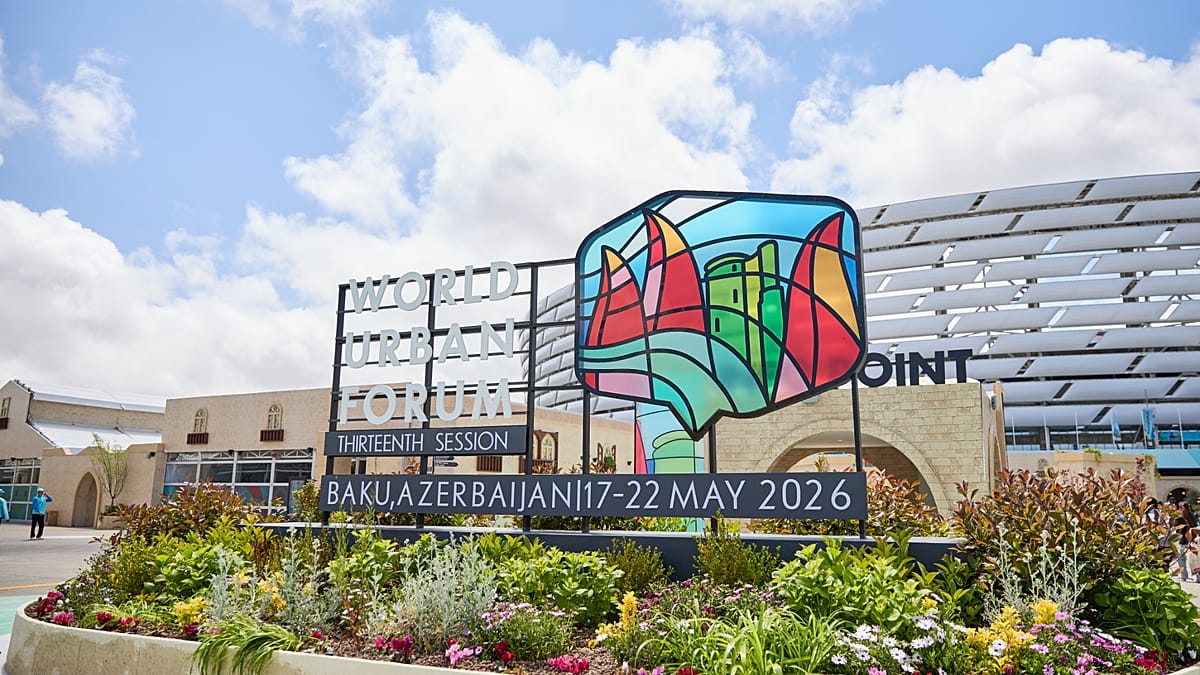
WUF13 Latin America Housing Climate - part of continuous US equities coverage monitoring market trends and reactions. At the World Urban Forum 13 (WUF13), Latin American leaders called for new housing finance models, stronger private investment, and climate-resilient urban development. The discussions highlight a potential shift in regional infrastructure priorities, with implications for investors in real estate, green bonds, and sustainable construction.
Live News
WUF13 Latin America Housing Climate - part of continuous US equities coverage monitoring market trends and reactions. Investors increasingly view data as a supplement to intuition rather than a replacement. While analytics offer insights, experience and judgment often determine how that information is applied in real-world trading. During the World Urban Forum 13 (WUF13), hosted by the United Nations Human Settlements Programme (UN-Habitat), Latin American leaders and urban policymakers emphasized the urgent need to address the region’s housing deficit and climate vulnerabilities. According to reports from the forum, leaders called for new housing finance models that could lower barriers to affordable housing, as well as stronger private investment to bridge funding gaps. The agenda also stressed climate-resilient urban development, recognizing that many Latin American cities face rising risks from extreme weather, sea-level rise, and infrastructure strain. The forum brought together government officials, financial institutions, and development experts to discuss practical solutions tailored to the region’s unique challenges. Delegates highlighted that traditional public financing alone is insufficient to meet the scale of need, and that innovative instruments—such as blended finance, green bonds, and public-private partnerships—could play a pivotal role. The calls for reform arrive as Latin America’s urban population continues to grow, with an estimated 80% of the region’s inhabitants now living in cities, according to UN data.
Latin American Leaders at WUF13 Push for Housing Finance Reforms and Climate-Resilient Urban Investment Observing correlations between markets can reveal hidden opportunities. For example, energy price shifts may precede changes in industrial equities, providing actionable insight.Experts often combine real-time analytics with historical benchmarks. Comparing current price behavior to historical norms, adjusted for economic context, allows for a more nuanced interpretation of market conditions and enhances decision-making accuracy.Latin American Leaders at WUF13 Push for Housing Finance Reforms and Climate-Resilient Urban Investment Monitoring investor behavior, sentiment indicators, and institutional positioning provides a more comprehensive understanding of market dynamics. Professionals use these insights to anticipate moves, adjust strategies, and optimize risk-adjusted returns effectively.Market participants increasingly appreciate the value of structured visualization. Graphs, heatmaps, and dashboards make it easier to identify trends, correlations, and anomalies in complex datasets.
Key Highlights
WUF13 Latin America Housing Climate - part of continuous US equities coverage monitoring market trends and reactions. Combining qualitative news analysis with quantitative modeling provides a competitive advantage. Understanding narrative drivers behind price movements enhances the precision of forecasts and informs better timing of strategic trades. The discussions at WUF13 carry meaningful implications for financial markets and infrastructure investment in Latin America. New housing finance models may open opportunities for banks, impact investors, and real estate developers to participate in affordable housing projects, particularly through instruments that reduce risk for private capital. The emphasis on private investment suggests that governments may look to create more favorable regulatory environments to attract funds, which could benefit sectors such as construction materials, homebuilding, and mortgage lending. The focus on climate resilience points to potential growth in green infrastructure spending—ranging from sustainable drainage systems to energy-efficient buildings. This could increase demand for environmental, social, and governance (ESG) investment products in the region, particularly green bonds and resilience funds. However, the pace and scale of any shift would likely depend on national policy reforms and the ability to structure bankable projects. Investors may want to monitor how countries like Brazil, Mexico, Colombia, and Chile respond to these calls in their upcoming urban planning and budget cycles.
Latin American Leaders at WUF13 Push for Housing Finance Reforms and Climate-Resilient Urban Investment Many investors appreciate flexibility in analytical platforms. Customizable dashboards and alerts allow strategies to adapt to evolving market conditions.Observing correlations across asset classes can improve hedging strategies. Traders may adjust positions in one market to offset risk in another.Latin American Leaders at WUF13 Push for Housing Finance Reforms and Climate-Resilient Urban Investment The role of analytics has grown alongside technological advancements in trading platforms. Many traders now rely on a mix of quantitative models and real-time indicators to make informed decisions. This hybrid approach balances numerical rigor with practical market intuition.Cross-asset analysis can guide hedging strategies. Understanding inter-market relationships mitigates risk exposure.
Expert Insights
WUF13 Latin America Housing Climate - part of continuous US equities coverage monitoring market trends and reactions. Expert investors recognize that not all technical signals carry equal weight. Validation across multiple indicators—such as moving averages, RSI, and MACD—ensures that observed patterns are significant and reduces the likelihood of false positives. From an investment perspective, the outcomes of WUF13 could influence capital flows into Latin American urban development over the medium term. The push for new housing finance models may encourage international development finance institutions and multilateral lenders to expand their exposure in the region, potentially crowding in private capital. The climate resilience agenda aligns with global trends in sustainable finance, which might see Latin America as a frontier for green bonds tied to urban adaptation projects. Still, significant hurdles remain—including political instability, inflation, and currency volatility—that could temper the speed of implementation. There is no guarantee that the rhetoric from the forum will translate into concrete projects or regulatory changes. Investors would likely need to assess each country’s specific policy commitments and fiscal capacity before reallocating capital. Broader trends in urbanization, climate risk, and housing affordability continue to make Latin America a region to watch for long-term infrastructure plays. Analysts note that successful execution would require coordinated efforts across public, private, and multilateral stakeholders. Disclaimer: This analysis is for informational purposes only and does not constitute investment advice.
Latin American Leaders at WUF13 Push for Housing Finance Reforms and Climate-Resilient Urban Investment Real-time data can highlight sudden shifts in market sentiment. Identifying these changes early can be beneficial for short-term strategies.Some investors integrate technical signals with fundamental analysis. The combination helps balance short-term opportunities with long-term portfolio health.Latin American Leaders at WUF13 Push for Housing Finance Reforms and Climate-Resilient Urban Investment Analytical dashboards are most effective when personalized. Investors who tailor their tools to their strategy can avoid irrelevant noise and focus on actionable insights.Some traders focus on short-term price movements, while others adopt long-term perspectives. Both approaches can benefit from real-time data, but their interpretation and application differ significantly.